
Your First Family Camping Trip: Gear, Sites, and Realistic Expectations
A practical introduction to family camping, covering campsite types, essential gear, safety basics, and how to set realistic expectations for beginners.
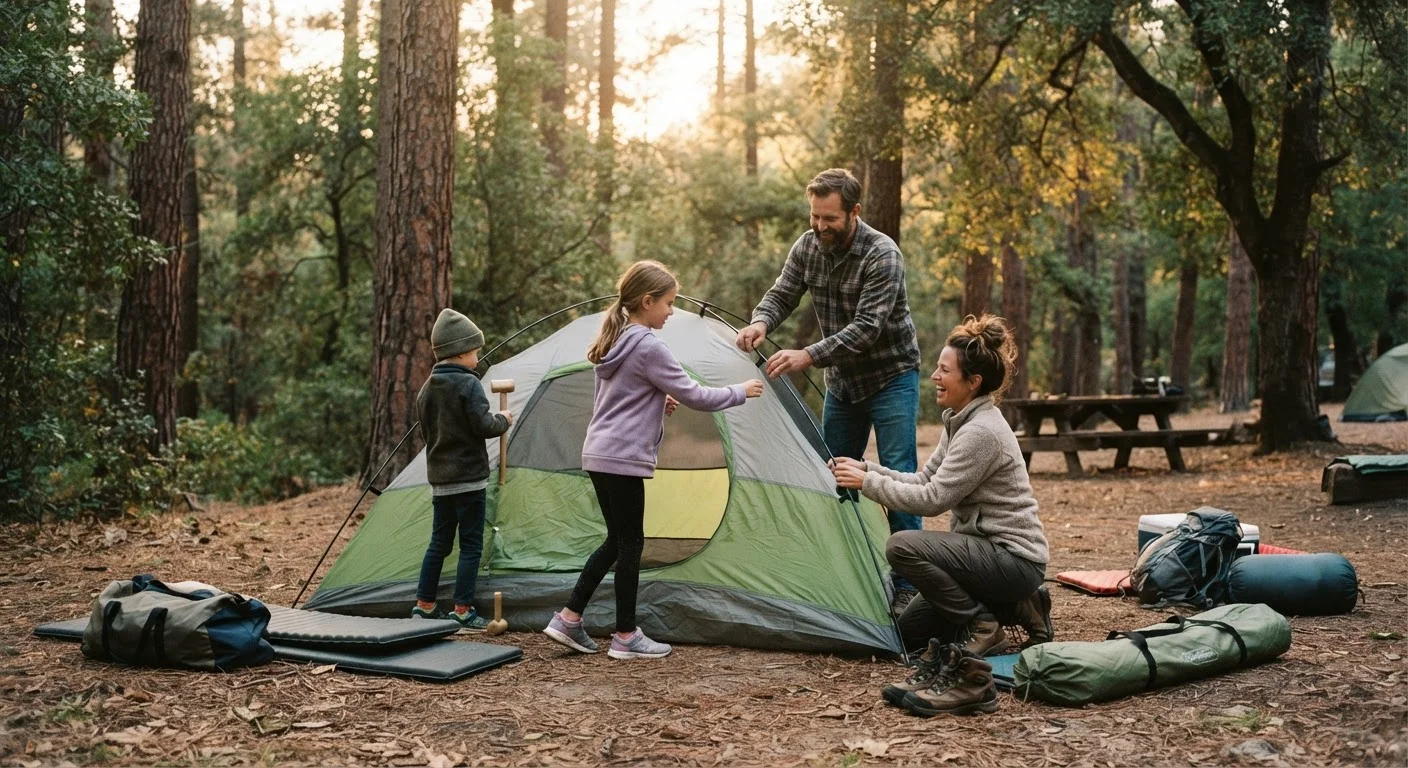
Photo: universalhub.net editorial
—— In This Article
Key Takeaways
- Developed campgrounds with restrooms and running water are the most forgiving starting point for first-timers.
- A short gear list covering shelter, sleep, and cooking covers the vast majority of first-trip needs.
- Reviewing campsite rules, first-aid basics, and weather forecasts before arrival prevents most avoidable problems.
- Children often adjust better when they understand what to expect and have one small role in the trip.
- Borrowing or renting gear before buying reduces upfront cost and helps families figure out what they actually need.
Choosing the right campsite for beginners
The single decision that shapes a first camping trip more than any other is campsite type. Developed campgrounds, sometimes called frontcountry sites, give first-time families a comfortable entry point. They have a parking space beside the tent pad, access to flush or vault toilets, and often potable water at a nearby spigot. That infrastructure removes a lot of variables you do not need to manage on a first trip.
National and state parks are the most practical places to start. State park campgrounds tend to have smaller crowds than headline national parks and charge lower nightly fees. Federal lands managed by the Bureau of Land Management or the U.S. Forest Service offer dispersed camping, which is free on many sites, but those areas lack facilities and require more experience to use comfortably.
Reservations matter more than many families expect. Sites at popular parks fill months in advance for summer weekends and holiday weeks. Recreation.gov handles bookings for federal lands; most state parks have separate portals. Planning a shoulder-season trip in late spring or early fall often means easier reservations and more moderate temperatures, which is especially helpful with young children.
Gear that actually matters on a first trip
Gear lists online routinely balloon to dozens of items. A first trip actually needs far less. Shelter and sleep are the core: a tent rated for at least one more person than your group size (the extra space matters for bags and gear), sleeping bags matched to the forecasted overnight low, and foam or inflatable sleeping pads. Without adequate insulation from the ground, even a warm sleeping bag leaves people cold.
For cooking, a two-burner camp stove or a simple grill grate over a fire ring handles most meals. A cooler, a few pots, and reusable plates and utensils are enough. Keeping meals simple, pasta, foil packets, or sandwiches, dramatically reduces the gear and prep required.
The items families most often forget: a headlamp for each person (not just one flashlight to share), a basic first-aid kit, a tarp for shade or rain cover, and at least one extra warm layer per person. Temperatures at elevation or near water often drop more than forecasts suggest.
Before buying anything, check whether friends or family own camping gear you can borrow. Several outdoor retailers also rent tents and sleeping bags. A trial run on borrowed gear tells you what gaps actually exist in your kit. See the common family travel packing mistakes article for a useful counterpoint on what not to overload into your car.
Safety basics every family should cover
Campfire safety is the first thing to go over with children before arrival, not after the fire is already lit. Establish a clear rule about how close kids can stand, who handles the lighter, and how the fire gets fully extinguished each night. Pouring water over coals and stirring until the hiss stops is the standard method; embers can stay hot for hours under ash.
Wildlife safety depends on the region. In bear country, all food, scented items, and cooking supplies go into a hard-sided vehicle or a provided bear box when not in active use. Even in areas without bears, storing food improperly can attract raccoons, squirrels, and other animals overnight.
Water safety deserves attention at sites near rivers or lakes. Young children can get into trouble in moving water faster than most parents anticipate. If your site borders water, designate it as an adult-supervised zone and confirm this rule before anyone pitches a tent.
Prepare one simple emergency reference
Write down the campground address, the nearest hospital or urgent care, and the non-emergency number for the local ranger station before you leave home. Keep it in a physical notepad in your camping bag. Many campgrounds have limited or no cell service, so a printed backup is worth the minute it takes to prepare.
A written list of the campground's address, the nearest urgent care facility, and relevant emergency numbers takes about two minutes to prepare and removes a lot of stress if something goes wrong. Cell service at many campgrounds is limited, so download offline maps before you leave home.
Setting realistic expectations for the whole family
The gap between a camping trip and a hotel stay is large, and managing that gap upfront makes the experience far more enjoyable. Campsites are louder, less private, and less convenient than most families are used to. That is not a flaw to fix; it is the environment you are in.
Children generally adapt well when they have something concrete to do or look forward to. Giving each child one small job, collecting firewood, setting up their own sleeping pad, or picking the dinner menu, creates investment in the trip. It also reduces the cycle of boredom complaints that can derail the first day.
Plan for at least one thing to go sideways: a rainstorm, a tent pole that does not cooperate, or a picky eater who refuses camp food. How the adults handle that moment sets the tone for the whole trip. Treating it as a problem to solve together rather than a failure tends to produce the better outcome.
Budgeting before you finalize a site helps too. If this is your first time thinking about a travel budget in a structured way, the family budget framework on this site covers how to allocate for trip costs. Once the trip is booked, the pre-trip checklist is a practical final pass before you leave the driveway.
Frequently Asked Questions

Travel Editorial Team
Travel Editorial Team is the collective byline for our editorial team and contributor network. Articles published under this byline or an editorial pen name are researched, written, and reviewed according to our editorial standards for clarity, consistency, and independence before publication.
View author profile