
Homeschooling vs. Public School: What Families Actually Weigh
A balanced look at the real tradeoffs between homeschooling and public schooling, covering cost, flexibility, social development, and academic outcomes.
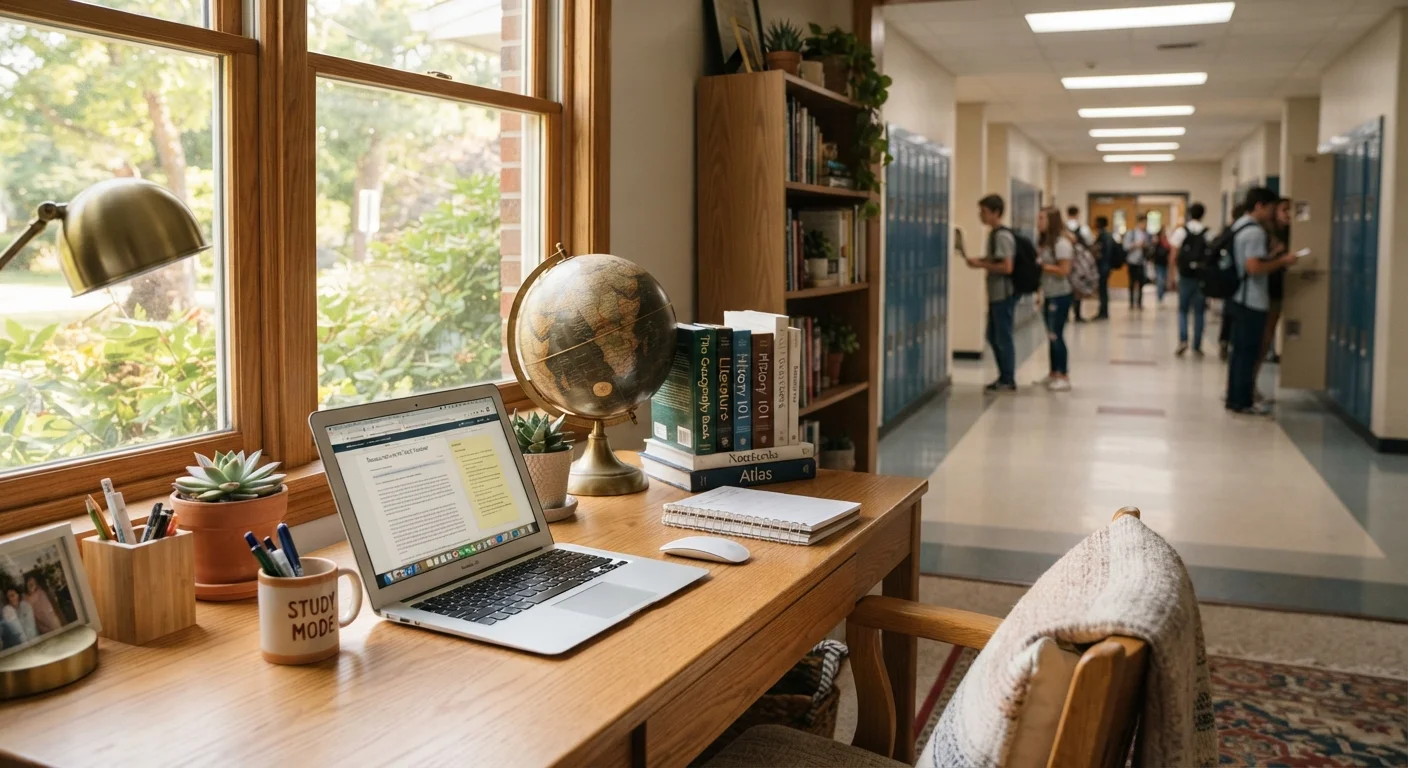
Photo: universalhub.net editorial
—— In This Article
Key Takeaways
- Public school is tuition-free and includes federally mandated services such as special education support.
- Homeschooling costs vary widely, ranging from nearly free using open resources to several thousand dollars annually.
- Both paths can produce strong academic outcomes; parental involvement matters in either setting.
- Social development requires deliberate planning in homeschooling but is built into the public school structure.
- Legal requirements for homeschooling differ by state, so families must verify local rules before starting.
Cost: what each path actually charges
Public school is funded through local, state, and federal taxes. Families pay nothing in tuition, and federal law guarantees access regardless of income. Incidental costs, including supplies, field trips, and activity fees, exist but are generally modest and sometimes waived for low-income families.
Homeschooling has no single price tag. A family using public library materials, free government curricula from sources like the Library of Congress, and platforms covered in our guide to free learning resources can keep annual costs well under $200. A family purchasing a packaged, accredited curriculum from a private provider may spend $1,500 or more per child per year. Co-op fees, standardized testing, and extracurricular enrollment add further costs that vary by community.
For families building a budget-conscious homeschool approach, our low-cost homeschool curriculum guide covers how to assemble a rigorous program using open educational resources without significant spending.
| Criterion | Homeschooling | Public school |
|---|---|---|
| Tuition cost | $0 to $2,000+ per year | Free (tax-funded) |
| Schedule flexibility | Fully flexible | Fixed calendar and hours |
| Curriculum control | Parent-chosen | State-mandated standards |
| Special education services | Parent must arrange privately | Federally guaranteed via IDEA |
| Peer socialization | Requires deliberate planning | Built into daily structure |
| State oversight | Varies significantly by state | Standardized and regulated |
| Teacher qualifications | No credential required in most states | Certified teachers required |
Academic outcomes and instructional quality
Research on homeschool versus public school academic outcomes is mixed and difficult to generalize. Studies published by the National Home Education Research Institute report that homeschooled students tend to score above national averages on standardized tests, but critics point out that these samples skew toward families with higher parental education and income. Public school data, collected by the National Center for Education Statistics, shows wide variation by district, state funding levels, and school quality.
What the evidence consistently supports is that parental engagement, regardless of the setting, correlates with better outcomes. A student in a well-funded public school with involved parents and a student in a carefully planned homeschool environment can both achieve strong results. The instructional quality in homeschooling depends heavily on the parent's time, subject knowledge, and willingness to supplement gaps using outside resources such as tutors, community college dual-enrollment programs, or online learning platforms for K-12.
3.3 million
Homeschooled students in the U.S.
The National Center for Education Statistics estimated approximately 3.3 million homeschooled students in the United States as of its most recent survey period.
90%
K-12 students attending public school
According to the National Center for Education Statistics, roughly 90% of school-age children in the U.S. attend public elementary and secondary schools.
50 states
States where homeschooling is legal
Homeschooling is legal in all 50 states, though reporting and curriculum requirements differ substantially from state to state.
Social development and community connection
Public schools provide daily, unplanned social interaction with peers across different backgrounds. Team sports, drama productions, student government, and lunch tables are all built into the structure without requiring parents to organize them. This regular contact builds social skills through repetition and mild friction, the kinds of low-stakes disagreements and negotiations that children learn to navigate over time.
Homeschooled children do socialize, but families must deliberately create those opportunities. Homeschool co-ops, community sports leagues, volunteer programs, and public library programs such as book clubs and maker spaces are common ways families build social contact. The quality of social development in homeschooling varies widely depending on how much effort a family invests in community integration.
Children who are homeschooled in rural areas with fewer co-op options or community programs may have a narrower peer network than those in urban or suburban settings with active homeschool communities.
Homeschool co-ops: a common middle ground
Many homeschooling families join co-operative learning groups where parents share teaching responsibilities across subjects and children learn alongside peers several days per week. Co-ops range from informal neighborhood groups to structured programs with set schedules and fees. They can reduce both the isolation concern and the instructional burden on any single parent. Availability depends on geography, so urban and suburban families generally have more options than rural ones.
Legal requirements and administrative responsibilities
Public school enrollment requires no special paperwork beyond proof of residency and immunization records in most states. The administrative burden falls on the school, not the family.
Homeschooling is legal in all 50 states, but requirements differ substantially. Some states, such as Alaska, require only notification. Others, such as New York, require detailed curriculum plans, annual assessments, and progress reporting submitted to the local school district. Before withdrawing a child from public school, families should consult their state's department of education website or a homeschool legal resource such as the Home School Legal Defense Association to understand their specific obligations. Failing to meet state requirements can result in truancy findings, so verification is necessary, not optional.

Education Editorial Team
Education Editorial Team is the collective byline for our editorial team and contributor network. Articles published under this byline or an editorial pen name are researched, written, and reviewed according to our editorial standards for clarity, consistency, and independence before publication.
View author profile