
Why Kids Struggle to Read Despite Classroom Instruction
Reading difficulties are more common than parents expect. This article explains the key reasons children fall behind and what families can do at home.
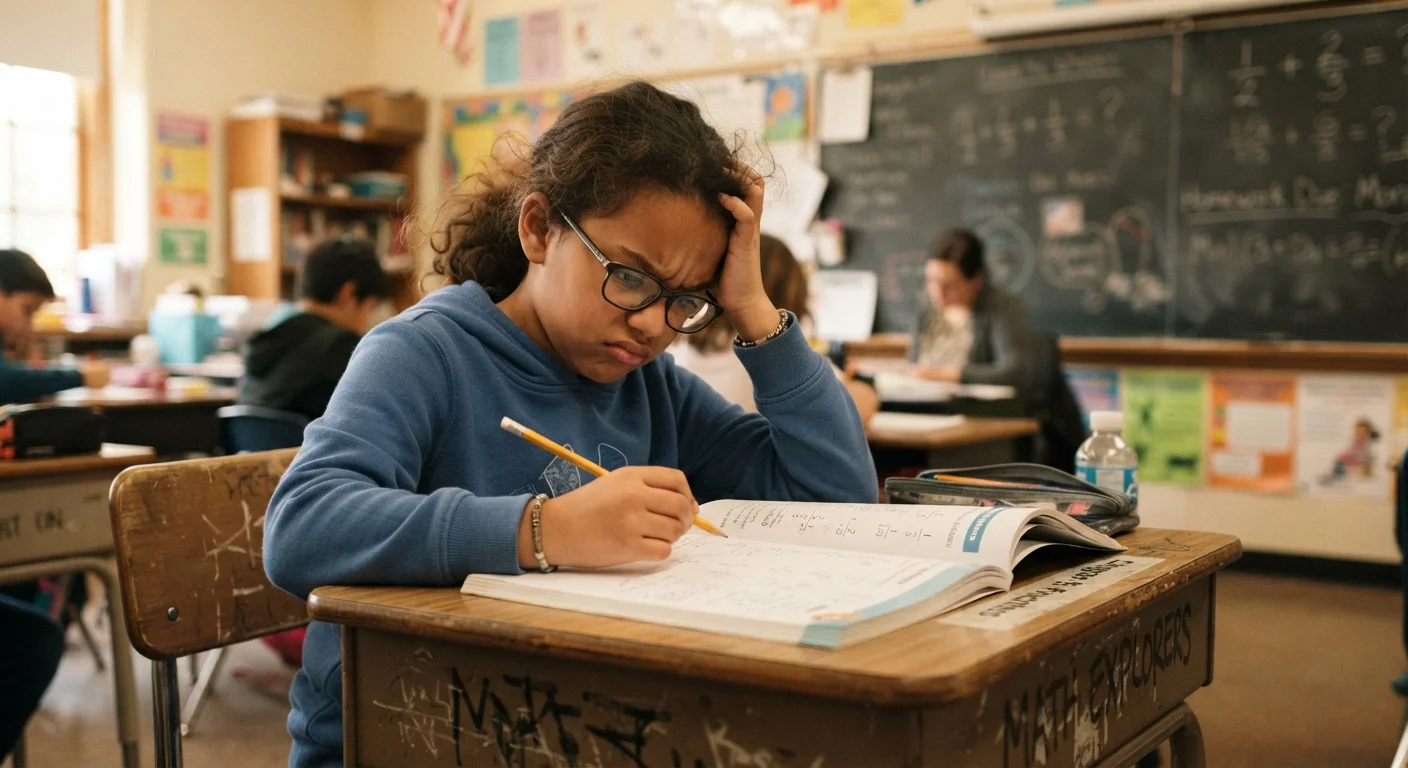
Photo: universalhub.net editorial
—— In This Article
Key Takeaways
- Reading struggles are rarely caused by laziness or low intelligence.
- Dyslexia and other language-based learning differences affect roughly 1 in 5 children.
- Classroom instruction alone may not address every child's foundational decoding gaps.
- Parents can take concrete, low-cost steps at home to reinforce phonics and fluency.
- Early identification of reading difficulties leads to better long-term outcomes.
Why reading is harder than it looks
Reading is not a natural skill. Unlike spoken language, which children acquire through ordinary exposure, reading requires the brain to learn an entirely new code: connecting printed letters to sounds, then sounds to meaning. When that code-learning process breaks down at any point, a child can fall behind despite sitting in a well-resourced classroom with a capable teacher.
Parents often notice something is wrong but struggle to name it. A child who avoids books, guesses at words based on pictures, or reads haltingly by second grade may be missing one or more foundational skills. The good news is that these gaps are identifiable and, in most cases, addressable with targeted practice.
Before assuming a child simply needs more time or more effort, it helps to understand what the research on reading development actually shows, because several widespread beliefs about why children struggle turn out to be wrong.
Common myths about reading difficulties
The following myth-and-fact pairs address the misconceptions parents and caregivers encounter most often. Clearing up these misunderstandings is the first step toward getting a struggling reader the right kind of support.
Myth
My child will grow out of reading difficulties on their own if I give it more time.
Fact
Reading difficulties do not typically resolve without targeted intervention. Without specific instruction, gaps tend to widen over time.
The International Dyslexia Association notes that reading difficulties are persistent and, without appropriate instruction, rarely self-correct. A child who is behind in decoding at the end of first grade is statistically likely to remain behind without direct, systematic phonics instruction. Waiting is not a neutral choice; it costs instructional time that becomes harder to recover as grade-level demands increase.
Myth
A child who struggles to read must have a vision problem, not a reading disability.
Fact
Most reading difficulties originate in language processing, not in eyesight. Vision problems and reading disabilities are separate issues.
The American Academy of Pediatrics has stated that vision therapy and colored lenses have not been shown to treat dyslexia or other language-based reading disabilities. The core difficulty in dyslexia involves phonological processing, the brain's ability to connect sounds to print symbols. A child with perfect vision can still have significant decoding difficulties, and a vision screening does not rule out a reading disability.
Myth
If a child is smart, reading problems are just a matter of not trying hard enough.
Fact
Reading disabilities occur across the full intelligence spectrum and are not caused by lack of effort or motivation.
Dyslexia, the most common reading disability, affects approximately 15 to 20 percent of the population according to the Yale Center for Dyslexia and Creativity. Many people with dyslexia have average or above-average intelligence. The disability reflects a specific difference in how the brain processes written language, not a global learning deficit. Framing reading struggles as a motivation problem causes children to internalize blame and often delays appropriate evaluation.
Myth
Reading out loud to a child is mainly for young toddlers, not school-age children who can read independently.
Fact
Reading aloud to children at any age builds vocabulary and comprehension skills that independent reading at their current level cannot.
A child's listening comprehension typically exceeds their reading comprehension until well into middle school. Reading aloud exposes children to more complex sentence structures, wider vocabulary, and richer content than they can access on their own. For struggling readers in particular, being read to maintains engagement with books and learning during a period when independent reading may feel frustrating. This practice costs nothing and can be built into a family's daily routine.
Myth
Boys are just naturally slower readers than girls, so it is not worth investigating a boy's reading delay.
Fact
While some studies show average differences in early reading development by sex, these averages do not predict whether an individual child has a reading disability that needs attention.
Historically, more boys than girls were identified with reading disabilities, but research suggests this partly reflected referral bias rather than a true difference in prevalence. Girls with reading difficulties were frequently overlooked. Any child, regardless of sex, who shows persistent difficulty with decoding, fluency, or comprehension deserves evaluation. Attributing a delay to gender delays identification and access to support.
For families exploring structured at-home practice, online learning platforms designed for K-12 students can supplement classroom phonics instruction at little or no cost.
What parents can do at home
School-based reading instruction varies widely in approach. Many districts still use curricula that do not align with what decades of reading research recommends, particularly around explicit phonics instruction. That gap means some children never receive systematic decoding practice in school at all.
At home, consistent daily reading aloud, even for just ten to fifteen minutes, builds vocabulary and listening comprehension. Pausing to ask a child what a word might mean from context, or to sound out an unfamiliar word letter by letter, reinforces the same skills taught in structured literacy programs.
Libraries remain one of the most accessible resources available. A library card provides free access to decodable readers, audiobooks, and in many cases, digital tutoring tools through programs like Hoopla and Libby. Some public library systems also offer free one-on-one reading support through volunteer literacy programs.
Summer is a period when reading skills can stall or slip. Low-cost strategies for preventing summer learning loss can help families maintain momentum between school years without hiring a tutor. Early action matters: children who receive targeted support before third grade have substantially better long-term literacy outcomes than those who wait.

Education Editorial Team
Education Editorial Team is the collective byline for our editorial team and contributor network. Articles published under this byline or an editorial pen name are researched, written, and reviewed according to our editorial standards for clarity, consistency, and independence before publication.
View author profile