
Reading Your Explanation of Benefits: A Field Guide
Medical bills and EOB forms can be confusing. This guide decodes each section so you can spot billing errors and understand what you actually owe.
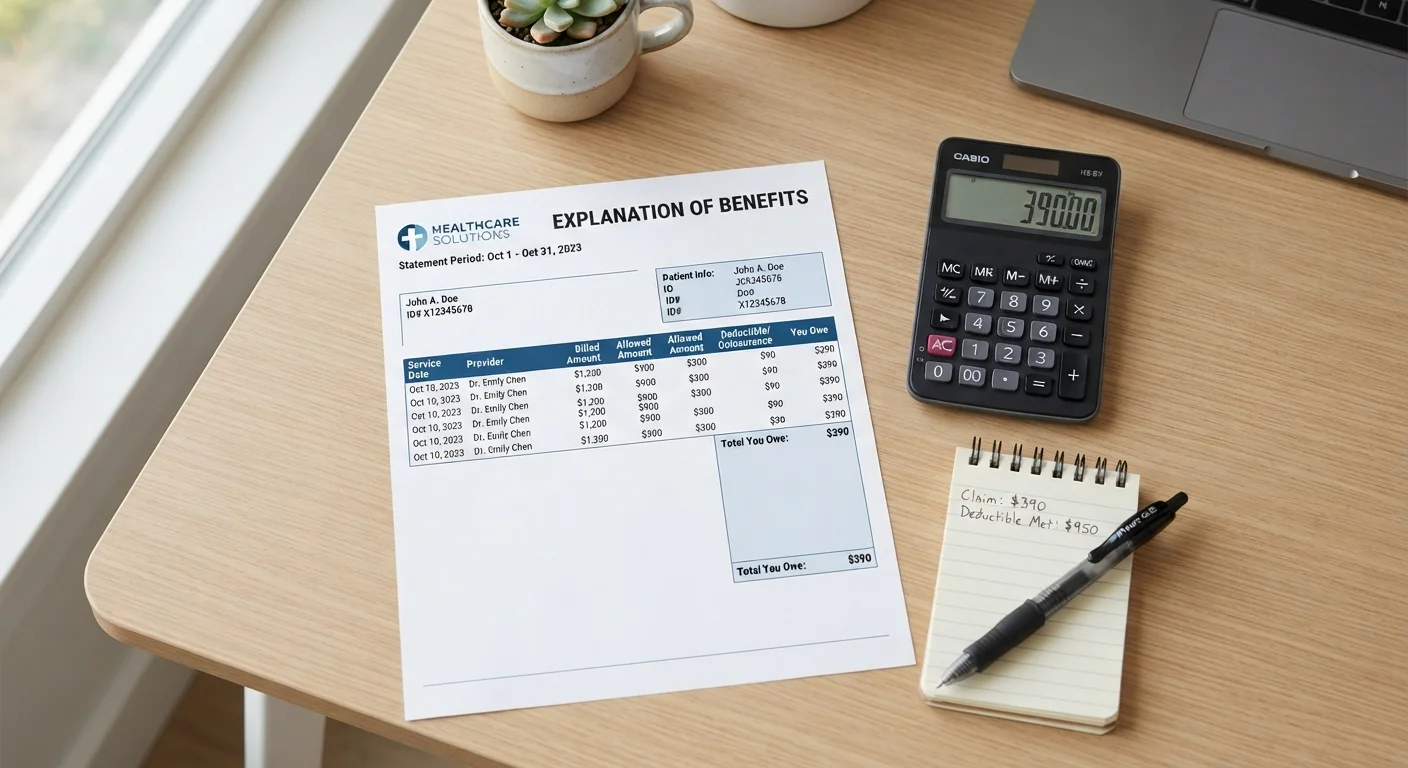
Photo: universalhub.net editorial
—— In This Article
Key Takeaways
- An EOB is a summary from your insurer, not a bill you must pay immediately.
- Billing errors on EOBs are common and can be disputed with your insurer or provider.
- Understanding each EOB field helps you verify that your plan applied discounts and benefits correctly.
- Your out-of-pocket maximum caps what you owe in a plan year once you reach it.
- Always compare the EOB to your provider's bill before sending any payment.
What an EOB actually is
An Explanation of Benefits (EOB) is a document your health insurer sends after a medical claim is processed. It shows what your provider billed, what the insurer allowed (the negotiated rate), what the plan paid, and what portion you may owe. It is not a bill. Paying from an EOB alone before receiving an actual invoice from your provider is a common and avoidable mistake.
Insurers are generally required to send an EOB for every processed claim. Many now deliver them through an online member portal rather than by mail, so checking your account after any appointment is worth building into your routine. If you have questions about your own coverage gaps, the guide on deductible myths covers how deductibles, copays, and out-of-pocket maximums interact.
Save every EOB you receive
Store EOBs for at least a year, or for as long as you keep related medical bills. If a provider sends a bill months after the visit, having the original EOB lets you verify the amounts match. Digital copies in your insurer's portal are convenient but not always retained indefinitely.
The core fields you will see on every EOB
EOB layouts vary by insurer, but all of them contain the same core data points. Learning these fields once lets you read any EOB with confidence.
- Billed amount: What your provider charged before any adjustments.
- Allowed amount (or plan allowance): The negotiated rate your insurer accepts. Amounts above this are typically written off by in-network providers.
- Plan paid: The dollar amount your insurer paid directly to the provider.
- Member responsibility: What remains after the plan pays, broken down into deductible, copay, and coinsurance columns.
- Adjustment reason codes: Short codes explaining why any portion was denied or reduced. Each code maps to a plain-language description, usually printed in a legend at the bottom or back of the document.
The member responsibility figure is what your provider will invoice you for. If it looks higher than expected, check whether the claim was processed as in-network. An in-network visit processed out-of-network is one of the most frequent sources of surprise balances, and it is correctable.
Step-by-step: how to review your EOB
Confirm the patient and service details
Check that the patient name, date of service, and provider name match your actual visit. A mismatched patient ID or wrong date can cause the claim to be processed under incorrect benefits or denied outright.
Verify the procedure and diagnosis codes
Each service line will have a procedure code (CPT code) and often a diagnosis code (ICD code). Compare these to the codes on the provider's bill. A single digit difference can change whether a service is covered.
You can look up CPT code descriptions on the American Medical Association's website or ask your provider's billing office to explain any code you do not recognize.
Check the allowed amount against the billed amount
For in-network providers, the allowed amount should be lower than the billed amount. The difference is the contractual write-off. You should not owe the portion that was written off. If a provider bills you for the full billed amount rather than the allowed amount, that is a violation of their network contract and you should contact your insurer.
Review each column of member responsibility
The member responsibility section usually breaks your share into deductible applied, copay, and coinsurance. Add these together and confirm the total matches the "Amount you owe" or equivalent summary line. Then check that the deductible applied matches your running year-to-date deductible total.
Read every adjustment reason code
If any line item was denied or reduced, an adjustment reason code explains why. Common codes include "service not covered under plan" (check your Summary of Benefits), "duplicate claim" (contact your provider), and "prior authorization required" (check whether auth was actually obtained). Do not assume a denial is final.
After working through each step, compare the resulting member responsibility total against the bill your provider sends. If the two figures do not match, contact your provider's billing department first, then your insurer if the discrepancy is not resolved.
Families who review EOBs regularly often catch duplicate charges, miscoded procedure codes, or benefits that were not applied. These errors are not rare. The Medical Billing Advocates of America has estimated that a substantial share of hospital bills contain mistakes, though exact rates vary by study and setting.
If you find a charge you believe is wrong, you have the right to formally appeal the claim decision with your insurer. Instructions for filing an appeal must be included in your plan documents. Keep copies of all correspondence.
Understanding your running cost totals
Most EOBs include year-to-date accumulators: how much of your deductible you have met, and how much of your out-of-pocket maximum you have reached. These numbers matter more than any single claim.
Once your out-of-pocket maximum is met, your plan generally covers 100% of in-network covered services for the rest of the plan year. Tracking this figure prevents you from overpaying after you have crossed that threshold. If an EOB shows member responsibility charges after your maximum should have been reached, that is a billing error worth disputing.
Reviewing these totals also helps with planning. If your family is close to the deductible late in the plan year, it may make sense to schedule non-urgent covered care before the year resets. For broader guidance on plan selection, see what to check before open enrollment closes.
Many families also find that reviewing EOBs surfaces coverage gaps that reveal they are on the wrong plan entirely. The reasons families overpay for insurance include choosing plans without reading these documents at all.
This article is for informational purposes only and does not constitute medical or financial advice. Consult a licensed healthcare professional or a qualified insurance professional for guidance specific to your situation.

Health Editorial Team
Health Editorial Team is the collective byline for our editorial team and contributor network. Articles published under this byline or an editorial pen name are researched, written, and reviewed according to our editorial standards for clarity, consistency, and independence before publication.
View author profile