
Room Refresh on a Tight Budget: Décor Changes That Actually Read as Upgrades
Low-cost décor swaps, from new hardware to rearranged furniture, that give a room a noticeably updated look without a full renovation.
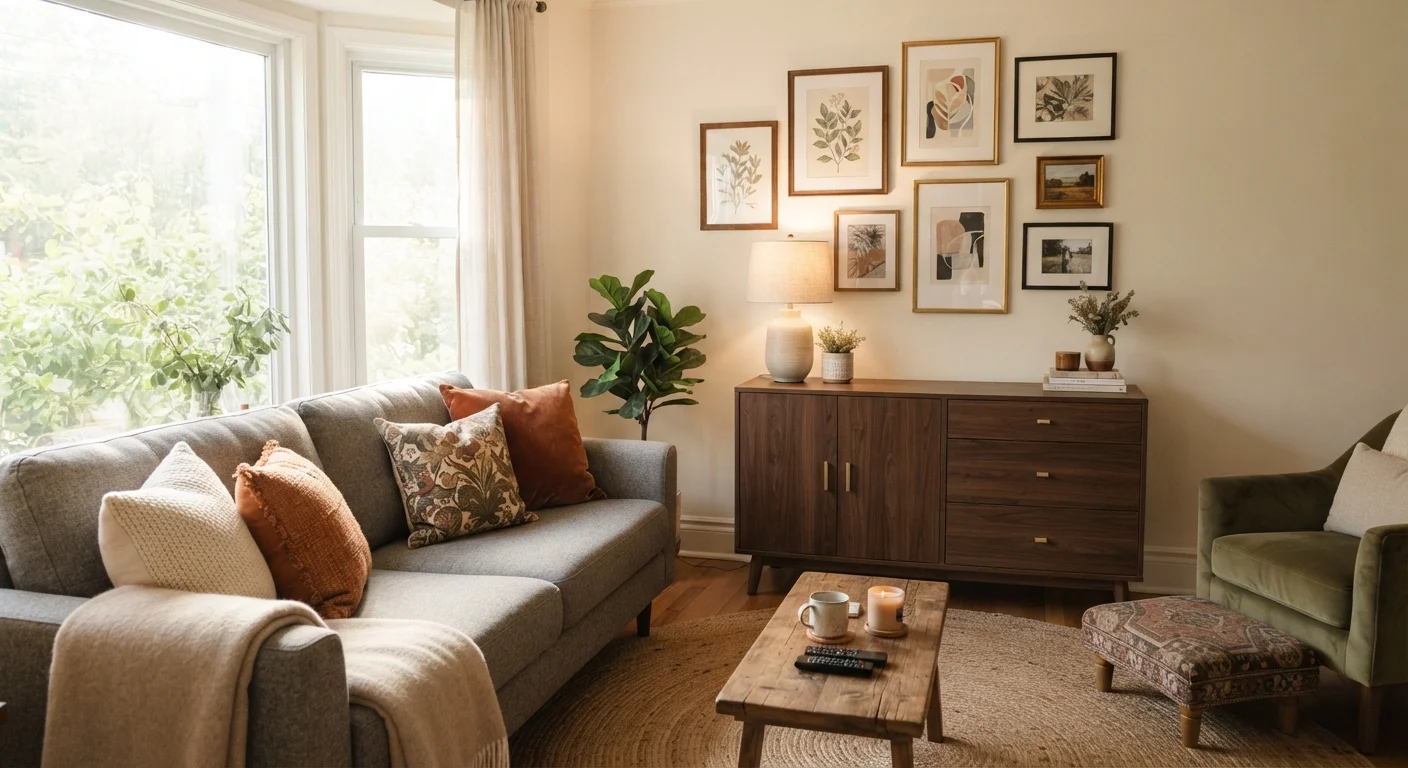
Photo: universalhub.net editorial
—— In This Article
Key Takeaways
- Swapping cabinet and drawer hardware is one of the lowest-cost changes with the highest visual return.
- Rearranging furniture costs nothing and can completely alter a room's function and perceived size.
- Layering lighting with multiple sources makes a space feel more intentional than a single overhead fixture.
- A consistent color palette across textiles creates a pulled-together look without repainting or renovating.
- Matting and framing existing art or photos gives flat walls a finished, curated appearance at low cost.
Why small changes read as big ones
Most rooms do not need a renovation. They need editing. The brain processes a room through contrast and hierarchy: when something changes noticeably, the whole space feels newer. That is the logic behind every change on this list. None requires a permit, a contractor, or a weekend of heavy labor. Several can be done in an afternoon. If you are also thinking about the broader financial side of homeownership, the hidden costs that catch buyers off guard are worth reviewing before committing to anything larger than these swaps.
Before starting any project, even a low-stakes décor refresh, a quick planning pass saves time and money. The home improvement planning checklist covers the basics, from tool inventory to safety steps, and applies equally to small jobs.
Replace cabinet and drawer hardware
Cabinet pulls and drawer knobs are among the most noticed details in a kitchen or bathroom, and they are also among the cheapest to change. A full set of matching pulls on dated cabinet faces can shift the perceived era of an entire room. The hardware itself is typically held by one or two screws, so the swap requires only a screwdriver and about ten minutes per piece.
Before purchasing, measure the existing hole spacing (the distance between the two screw holes on a pull). Staying within that measurement avoids patching and repainting. Consistent finish across all visible metal in the room, faucets, light fixtures, and switch plates, will strengthen the result.
Matching hardware finish across a room creates cohesion that reads as a deliberate design decision.
Rearrange the furniture
Furniture position shapes how a room functions and how large it appears. Most rooms are arranged the way the first occupant placed pieces, not the way that makes the most sense for how the space is actually used. Moving a sofa away from the wall, angling a chair toward a window, or centering a seating group around a rug rather than a television can make the same room feel substantially different.
The process costs nothing. Sketch a rough floor plan before moving anything heavy, and test at least two arrangements before settling. Pay attention to traffic flow: clear paths of 36 inches or more between pieces prevent the room from reading as cramped.
Moving furniture away from walls often makes a room feel larger, not smaller.
Layer your lighting
A single overhead fixture is functional but flat. Rooms that feel comfortable typically have light at multiple heights: an overhead source, a table or floor lamp, and sometimes an accent light aimed at a wall or shelf. The variation creates depth and makes the room usable in different ways at different times of day.
Switching a harsh overhead bulb to a warm-toned option is the lowest-cost first step. Adding a plug-in floor lamp or table lamp to a dim corner costs less than most people expect and does not require any electrical work. Dimmer switches are worth considering for overhead fixtures in living areas; in most cases they are straightforward to install, though anyone unfamiliar with electrical work should consult a licensed electrician before attempting it.
Warm-toned bulbs and multiple light sources change the mood of a room more than almost any other single change.
Unify textiles with a limited color palette
Throw pillows, blankets, curtains, and area rugs are the most replaceable soft goods in a room. When they share two or three colors rather than competing across five or six, the space looks more coherent without any structural change. The specific colors matter less than the consistency.
Start by identifying the one color already in the room you like most, often from an existing rug or a piece of furniture that will stay. Build the textile palette from there, using that color as the anchor. Curtains that reach from ceiling to floor rather than stopping at the window frame make ceilings appear higher, which is a reliable visual upgrade that costs only the difference in panel length.
Curtains hung close to the ceiling and falling to the floor make standard room heights look taller.
Mat and frame what you already own
Bare walls and small, unframed prints both make a room feel unfinished. A simple fix is to mat existing artwork, photos, or even pages from books or calendars using frames from a craft or home goods store. A wide mat around a small image makes the piece look more substantial and gallery-like.
Arrangement matters as much as the frames themselves. A grid of evenly spaced frames in matching or complementary sizes reads as intentional. For a gallery wall, cut paper templates the size of each frame and tape them to the wall first to plan spacing before driving any nails. This avoids a wall full of patched holes from repositioning.
A wide white mat transforms an ordinary print into something that looks gallery-quality.
Edit and declutter surfaces
Surfaces covered with accumulated objects do not read as decorated. They read as full. Removing items from shelves, counters, and tables to a point where individual objects have clear space around them changes the visual weight of the room immediately. This costs nothing and often makes subsequent changes, like new hardware or rearranged art, more visible.
A practical method is to clear a surface entirely, then return only the items that have a deliberate reason to be there, whether functional or aesthetic. Odd numbers of objects (three, five) tend to group more naturally than even numbers when arranging decorative items on a shelf or table.
Objects with clear space around them look chosen; objects packed together look stored.
Getting the most from each change
These updates work best when they build on each other. New hardware on dated cabinets matters more if the room is uncluttered. Better lighting reveals the texture of a fresh textile arrangement. If you are ready to go further, a DIY paint job is the natural next step, and it helps to know which parts of a paint job actually save money versus which shortcuts cause costly do-overs.
Start with one room, one change
Attempting several updates at once in multiple rooms makes it hard to see what is working. Pick the room you spend the most time in and make one or two changes, then wait a few days before deciding what else to adjust. This approach also spreads cost over time, which fits a tight budget better than buying everything at once.
The goal is not to make the room look expensive. It is to make it look considered. That distinction matters when budget is the constraint, because deliberate choices read better than scattered ones regardless of what was spent.

Home & Garden Editorial Team
Home & Garden Editorial Team is the collective byline for our editorial team and contributor network. Articles published under this byline or an editorial pen name are researched, written, and reviewed according to our editorial standards for clarity, consistency, and independence before publication.
View author profile