
Navigating Urgent Care, Emergency Rooms, and Telehealth: Which to Use When
A practical breakdown of urgent care centers, hospital ERs, and telehealth visits to help families choose the right care setting and avoid surprise bills.
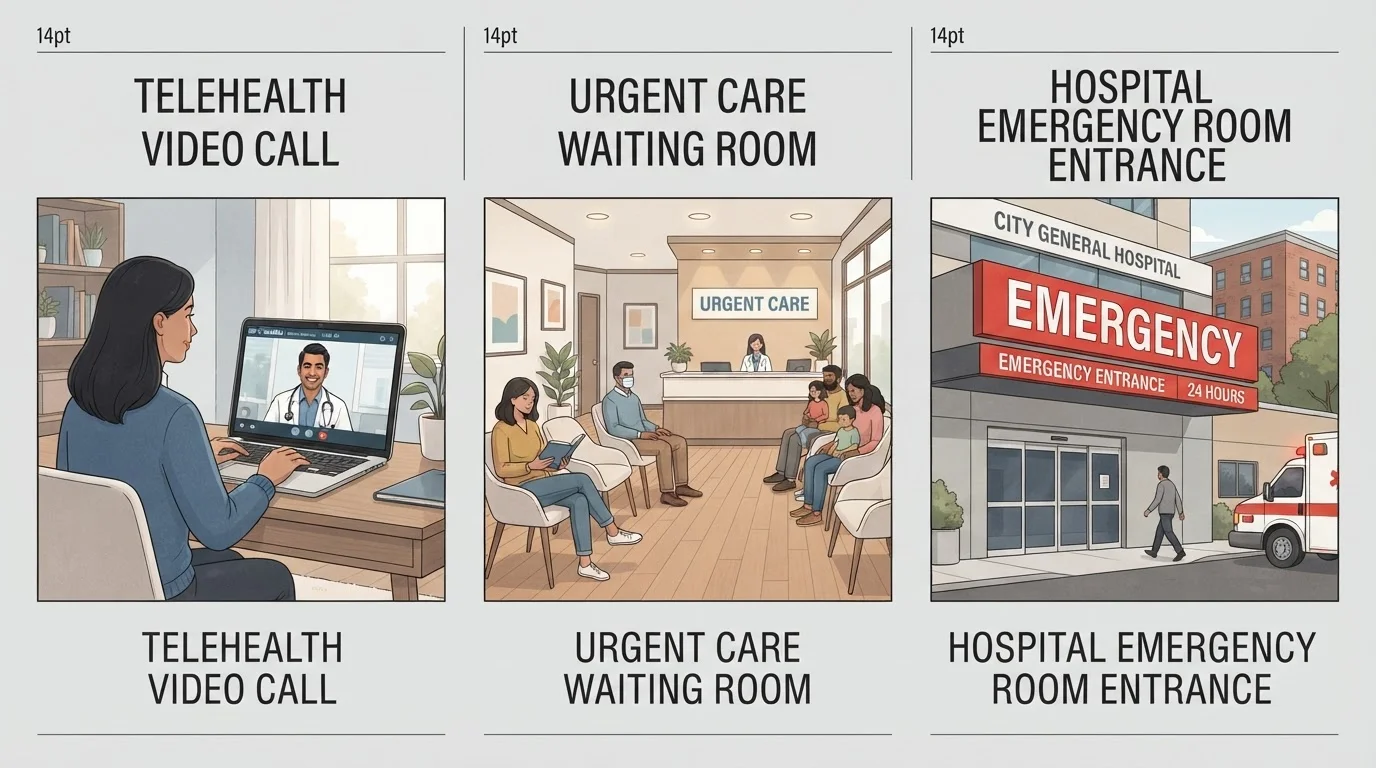
Photo: universalhub.net editorial
—— In This Article
Key Takeaways
- Telehealth is typically the lowest-cost option for minor, non-urgent conditions that do not require a physical exam.
- Urgent care centers handle most same-day illnesses and injuries at a fraction of an ER visit's cost.
- Hospital emergency rooms are for life-threatening or serious conditions where delay could cause lasting harm.
- Your insurance plan's cost-sharing tiers often differ substantially across all three settings.
- Calling your insurer or a nurse hotline before choosing a setting can prevent large surprise bills.
How cost and access differ across the three settings
The average cost of an emergency room visit in the United States runs well above $1,000 before insurance adjustments, according to federal healthcare cost data. An urgent care visit typically falls between $100 and $200 for self-pay patients, and a telehealth visit often costs $50 to $75 or less. Those gaps do not disappear with insurance: your plan's cost-sharing tiers almost always assign a higher copay or coinsurance rate to ER visits than to urgent care or telehealth.
Access also differs. Telehealth appointments are often available within minutes, around the clock. Urgent care centers generally operate on evenings and weekends without appointments. Hospital ERs are always open but involve triage wait times that reflect severity, meaning a lower-urgency issue can mean hours in a waiting room.
| Telehealth | Urgent care | Emergency room | |
|---|---|---|---|
| Typical self-pay cost | $50-$75 | $100-$200 | $1,000+ |
| Availability | 24/7, on-demand | Extended hours, no appointment | 24/7 always open |
| Physical exam capability | Visual/verbal only | Full basic exam, X-ray, basic labs | Full diagnostics, imaging, IV care |
| Best for | Minor, diagnosable remotely | Same-day non-emergency in-person | Serious or life-threatening symptoms |
| Typical insurance copay tier | Lowest (often $0-$25) | Mid-tier ($50-$100) | Highest ($150-$350+) |
| Wait time | Minutes | 30-90 minutes typical | Hours for lower-acuity cases |
Before choosing a setting, check your plan's Summary of Benefits. Some plans waive the telehealth copay entirely; others count urgent care toward a separate deductible. See our open enrollment checklist for a structured way to review those details before you need care.
When telehealth is appropriate
Telehealth works well for conditions a clinician can assess through conversation and visual inspection alone. Common examples include urinary tract infections (where symptoms are distinctive), mild respiratory illnesses, pink eye, skin rashes with visible photos, cold sores, and mental health follow-ups. Many primary care physicians now offer telehealth slots alongside in-person visits, which can preserve continuity of care.
Telehealth has clear limits. A provider cannot listen to lung sounds, palpate an abdomen, or measure blood pressure remotely. If a diagnosis depends on physical examination findings or in-office lab work, the clinician will typically redirect the patient to an in-person setting rather than guess. That redirect is appropriate, not a failure of the medium.
Check your plan before opening an app
Many insurers maintain a list of covered telehealth platforms and apply different cost-sharing rates depending on which you use. A telehealth visit through an in-network platform may cost you nothing beyond your premium, while an out-of-network service could generate an unexpected bill. Log into your insurer's member portal or call the number on your insurance card to confirm which telehealth services your plan covers before your first visit.
Prescription rules also vary by state: some controlled substances and certain medications cannot be prescribed via telehealth under federal or state regulations. Your telehealth provider should inform you of these limits during the visit.
When urgent care makes sense
Urgent care centers are set up for same-day, non-life-threatening conditions that need hands-on evaluation. Sprained ankles, minor cuts that may need stitches, ear infections, strep throat confirmed by rapid test, mild asthma flares, and suspected urinary tract infections that telehealth could not resolve are all within scope.
Most urgent care centers have on-site X-ray and basic lab capability. That makes them suitable for suspected minor fractures, which a telehealth visit cannot assess. They are not equipped for cardiac monitoring, CT or MRI imaging, IV medication administration, or surgical intervention. If a condition requires any of those resources, staff will transfer the patient to an ER.
One cost-related note: some insurers classify freestanding urgent care clinics differently from those attached to a hospital. A facility labeled "urgent care" may bill under hospital outpatient rates if it is affiliated with a health system, raising your cost-sharing. Confirm the billing classification with the facility before you register, when possible.
When to go directly to the emergency room
Certain symptoms should go straight to an ER, without stopping at urgent care or waiting for a telehealth slot. These include chest pain or pressure, difficulty breathing, signs of stroke (sudden facial drooping, arm weakness, or speech difficulty), severe allergic reactions, uncontrolled bleeding, loss of consciousness, seizures, and serious injuries from accidents or falls.
For children, additional ER indicators include high fever in infants under three months, difficulty breathing, severe dehydration with inability to keep fluids down, and altered consciousness. Consult a qualified healthcare professional or call 911 if you are uncertain whether a situation is an emergency. Delaying true emergencies to save on cost can result in harm that far outweighs any financial benefit.
After an ER visit, the billing process is worth scrutiny. Our guide on reading your Explanation of Benefits walks through how to check for billing errors, and negotiating medical bills covers options if the balance is larger than expected.
This article is for general informational purposes only and is not medical advice. Always consult a qualified healthcare professional for guidance about your specific symptoms or situation. In an emergency, call 911 immediately.

Health Editorial Team
Health Editorial Team is the collective byline for our editorial team and contributor network. Articles published under this byline or an editorial pen name are researched, written, and reviewed according to our editorial standards for clarity, consistency, and independence before publication.
View author profile